
Second Trial Verdict Reversed in Crocs Unfair Competition Case: Dispute Over Boundaries of Product Trade Dress Behind Million-Dollar Claim
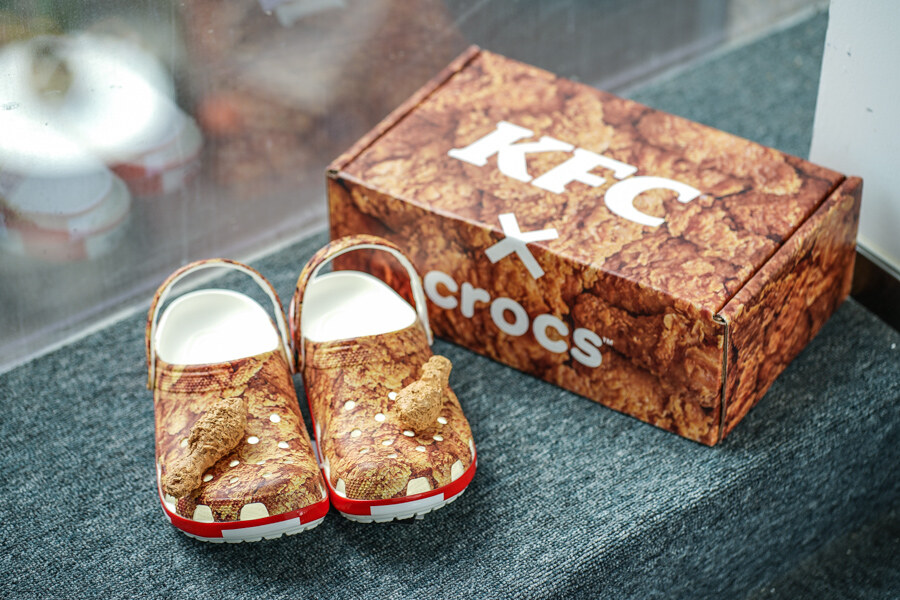
The boundary disputes over product shape trade dress are essentially a balancing act among brand intellectual property protection, the freedom to design practical product functions, and consumer choice.
In the scorching summer, clog-style shoes have become a perennial bestseller in China's consumer market. With their massive market scale, a multi-year legal battle over intellectual property rights—centered on functional design and product ornamentation—has unfolded in the courts.
IPR Daily reports that the Jiangsu High People's Court recently issued a second-instance ruling in an unfair competition dispute between Crocs Trade (Shanghai) Co., Ltd. ("Crocs") and Shanghai热风 Fashion Enterprise Development Group Co., Ltd. (formerly Shanghai热风 Fashion Enterprise Development Co., Ltd.), Ningbo热风 Enterprise Management Co., Ltd., Shanghai Hot Tao E-commerce Co., Ltd., Hangzhou Morton Trading Co., Ltd., Kunshan热风 Clothing & Trading Co., Ltd., and Shanghai热风 Fashion Enterprise Development Co., Ltd. Pudong New Area Century Avenue Branch (collectively "热风"). The court held that the clog shoes asserted by Crocs do not constitute a well-known product decoration with certain influence, and that热风's production and sale of the disputed clogs did not constitute unfair competition. The ruling overturned the first-instance judgment by the Suzhou Intermediate People's Court and dismissed all of Crocs' claims.
Plaintiff sought 1500 million yuan in damages for trade dress infringement; first instance court awarded 250 thousand yuan.
This lawsuit was initiated by Crocs against the Intermediate People's Court of Suzhou. Crocs alleges that it is authorized by Crocs, Inc. to use "CROCS" andCrocsIntellectual property rights (including but not limited to trademarks, patents, trade dress and packaging design, trade secrets, works, trade names, and designs) arising from or derived from the brand and its products, with the right to take legal action in the name of the party concerned against any infringement of such intellectual property rights within the People's Republic of China. The "CROCS" and "Kaluochi" brands have accumulated significant market recognition through long-term operations. Relying on its nationwide physical store network and online sales channels including Tmall, JD.com, and Douyin, Hot Wind sells 20 pairs of Crocs-style shoes that are highly similar in appearance to Kaluolchi's 5 product lines, including "Classic Clog," "Little Whale," "Dite," "Warm Cotton," and "Bump Warm Cotton."
During the trial, Crocs distilled the product's trade dress for the shoes in question into three core features: first, a wide, rounded toe; second, evenly spaced circular perforations across the upper; and third, an adjustable strap at the rear that can slide forward and backward, secured to the shoe body with a round button. Crocs argued that this distinctive trade dress serves to identify the source of the goods and qualifies as "well-known product packaging or decoration" under the Anti-Unfair Competition Law. As a major competitor in the same industry, Hot Wind failed to take reasonable precautions and instead engaged in imitation that appears to unfairly capitalize on Crocs' goodwill, constituting unfair competition.
Accordingly, Crocs requests the court to order热风 to immediately cease using packaging and decoration that are identical or similar to those with a certain influence for Crocs' products; compensate Crocs for economic losses and reasonable expenses totaling 1500 ten thousand yuan; and publish an apology in theChina Market Regulation DailyPublish a retraction in "Consumer Daily" and on the homepage of each e-commerce store to mitigate the impact.
After review, the first-instance court partially upheld Crocs' claims. The court found that "CROCS" and "卡骆驰" branded clogs enjoy high market recognition. The three core features of the product packaging for the 5 footwear items asserted by Crocs collectively constitute a "packaging with certain influence." Since the allegedly infringing products share these three common features, Hotwind's actions constituted unfair competition. Accordingly, the first-instance court ruled that Hotwind must cease infringement, compensate for losses, and bear other legal liabilities. However, regarding damages calculation, the court determined that Crocs' proposed method lacked sufficient basis. Ultimately, the court discretionarily ordered Hotwind's entities to jointly pay Crocs 250 million yuan for economic losses and reasonable expenses incurred in enforcing rights, while dismissing Crocs' request for a public statement to eliminate adverse effects.
Both parties appealed; the Second Instance Court engaged in fierce litigation and overturned the original judgment, dismissing all of the plaintiff's claims.
After the first-instance judgment, both parties appealed to the Jiangsu High People's Court. During the second instance, both sides submitted substantial new evidence addressing three core issues: the nature of the decoration, product functionality, and recognition of reputation, escalating the litigation confrontation.
Crocs continues to uphold its original stance in the legal action. On one hand, it has submitted additional evidence to demonstrate that the design of the 5 Croc shoe models involved possesses inherent distinctiveness and high brand recognition. On the other hand, it has provided historical records of its enforcement efforts to substantiate its long-standing commitment to protecting its brand rights. Crocs insists on claiming ¥1500 million in damages and requires热风 to publish a public apology to mitigate the negative impact.
Hotwind's appeal sought to overturn the original judgment and dismiss all claims. In an interview with IPR Daily, Zhao Lijie and Dai Jinping of Beijing Yinghe Law Firm, who represented Hotwind in the second instance, explained that their legal team refined its defense and counterattack strategies based on a precise analysis of the case. Regarding the non-infringement defense, they argued that the three disputed design features are inherent product structures and functional shapes essential for the product's performance, widely adopted across the industry, and thus incapable of distinguishing the source of goods. They further emphasized that Crocs' overall brand reputation cannot be equated with the exclusive market recognition of the specific 5 product's trade dress. Moreover, they highlighted that functional design elements qualify as protectable "influential" trade dress under the Anti-Unfair Competition Law only if they meet stricter evidentiary standards in distinguishing the source of goods. Hotwind also demonstrated that Crocs failed to prove that the three disputed features were influential or served to distinguish the source of goods. The second-instance court largely accepted Hotwind's primary defenses.
After re-examining the entire case based on new evidence submitted during the second-instance proceedings, the Jiangsu High People's Court adopted the following key judicial reasoning: First, regarding Crocs' advertising efforts, the evidence presented was insufficient to demonstrate widespread promotion of the disputed trade dress. Only limited evidence reflected the disputed design, indicating a narrow reach; moreover, prior to 2017, promotional activities for the "CROCS" brand itself were also minimal. Consequently, it is difficult to establish that the appearance of the 5 shoe model alone has established a stable source-identifying association in consumers' minds. Second, based on Crocs' financial statements and sales data, the company failed to prove the sales performance of the 5 clog-style shoes featuring the disputed trade dress. Furthermore, the ranking of the "CROCS" brand cannot be equated with the market position of footwear products bearing the specific disputed design. Third, concerning Crocs' own understanding of the disputed trade dress, certain media reports indicate that Crocs acknowledged the design possesses functional effects. This judicial finding directly supports Hot Wind's defense of "functional design," confirming that the second-instance court holds that product designs combining functionality with shape-based trade dress require stricter criteria under the Anti-Unfair Competition Law compared to textual or graphic elements applied externally to goods. Such claims must be substantiated by sufficient evidence demonstrating their actual role in distinguishing the source of goods. Fourth, regarding Crocs' enforcement history, cases involving protection of trade dress number only 2. Other evidence either reflects complaints filed after 2021 4 or primarily targets trademark infringement; notably, a trademark's reputation does not automatically translate to equivalent recognition of the disputed trade dress.
Ultimately, the second-instance court held that "CROCS" offers a wide variety of shoe designs. The evidence submitted by Crocs Inc. was insufficient to prove that, at the time of the alleged infringement in this case, the 5-style clogs bearing the claimed trade dress had achieved sufficient market influence or established a stable association in consumers' minds to identify the source of the goods. Therefore, the claimed trade dress does not qualify as a product design with certain influence under the Anti-Unfair Competition Law. Accordingly, the second-instance court ruled that the first-instance judgment incorrectly determined whether the trade dress qualified as a product design with certain influence. The first-instance judgment was reversed, and all of Crocs Inc.'s claims were dismissed.
Rethinking the Boundaries of Product Trade Dress in a Multi-Million Case
From the first-instance ruling that found infringement and awarded discretionary compensation of 250 million yuan, to the second instance overturning the original judgment and dismissing Crocs' entire set of claims, this case involving a total amount of 1500 million yuan is not only a commercial clash between two well-known brands but also directly addresses a critical industry issue: whether a product's distinctive shape can constitute a "decoration with certain influence" under the Anti-Unfair Competition Law.
In fact, Crocs asserted identical trade dress rights in a separate lawsuit against Quanzhou-based enterprises over clog designs, relying on the same three core design features. That case also saw a reversal: infringement was found at first instance but overturned on appeal. In both cases, the appellate courts rejected Crocs' trade dress claims, though each court emphasized different reasoning. This reflects a trend toward increasingly refined and rigorous judicial standards in China for protecting product shape and configuration as trade dress.
In judicial practice, a key challenge in intellectual property adjudication remains determining whether a product's shape or configuration qualifies as a distinctive trade dress protected under the Anti-Unfair Competition Law due to its market influence, or whether it constitutes a generic design arising from common usage, a shape dictated solely by the product's nature, a shape necessary to achieve a technical effect, or a shape that confers substantial value to the product. On one hand, some brands attempt to monopolize functional product designs as exclusive trade dress by leveraging market popularity, thereby encroaching on competitors' reasonable design freedom and normal production space. On the other hand, certain manufacturers and operators often cite functional design as an excuse to freely copy established market styles, undermining the goodwill built up by brand owners through long-term operations.
At its core, the debate over the boundaries of product shape and configuration trade dress is a balancing act among brand intellectual property protection, freedom in functional product design, and consumer choice. According to attorneys Zhao Lijie and Dai Jinping, the key holding in the second-instance judgment provides critical guidance for protecting such trade dress under the Anti-Unfair Competition Law. Future litigation strategies will hinge on how effectively parties can: (1) present evidence and defenses regarding market recognition and source-identifying function with greater precision; and (2) meaningfully distinguish between overall brand reputation and the distinctiveness of individual product designs. However, this case has only just begun to spark industry-wide reflection on the scope of rights, evidentiary standards, and strategic approaches surrounding product shape and configuration trade dress.